Our mission & values
To relieve hardship within the parish of Farndon — quietly, locally, and one household at a time.
Our mission was written into a Charity Commission Scheme in 1962, and into a parish vestry minute three centuries earlier. We have not changed it. We have only tried, over the years, to live up to it more faithfully.
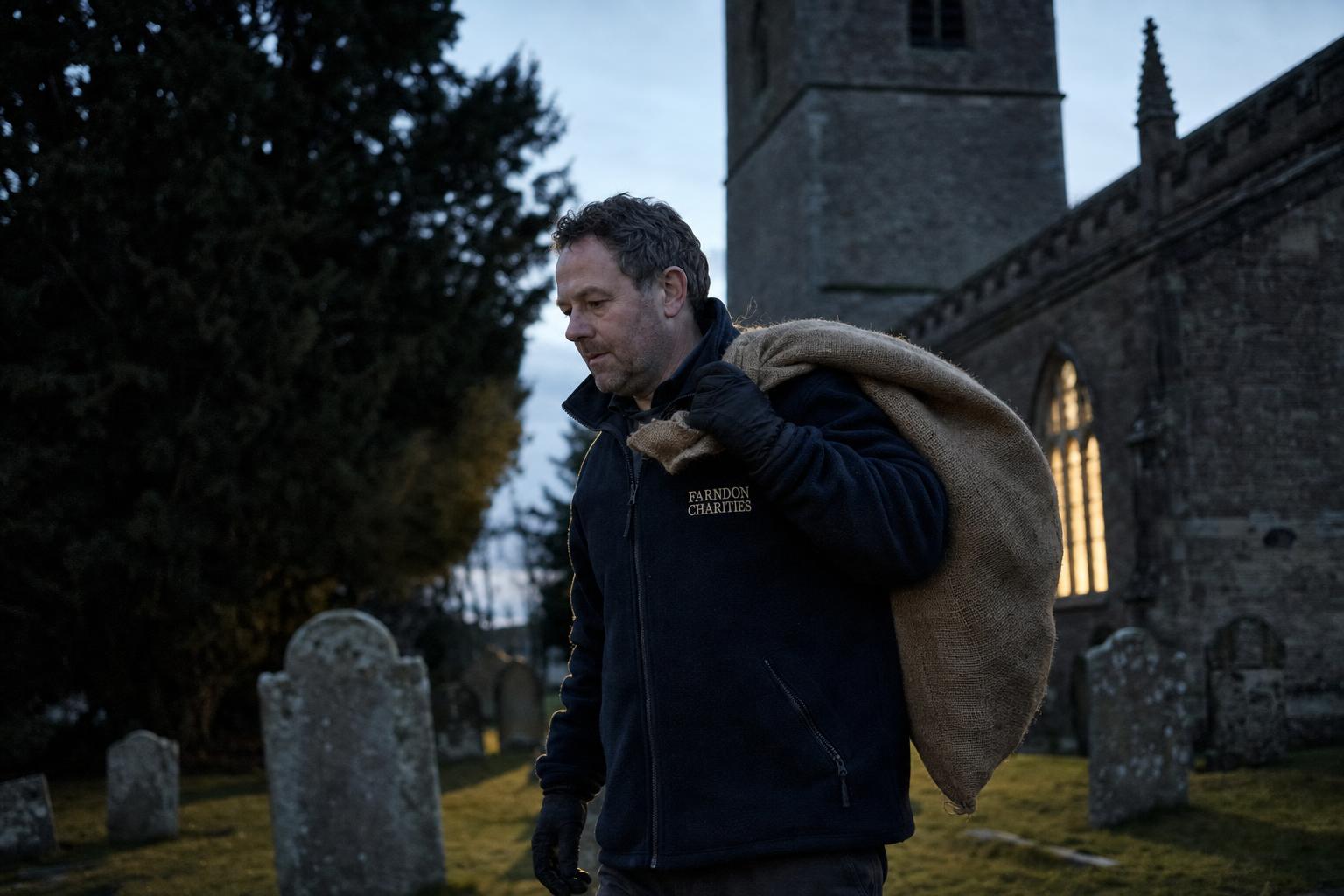
A great deal of trouble is taken, in the modern charity sector, to translate small acts of neighbourliness into theories of change. We are a small parish trust and we are sceptical of theories. But we have, after three centuries, learned a few things about how a £200 grant in the right week can shift the weight of a household's year — and we think it is honest to set that out plainly, so that anyone giving us money knows what their pound is going to do.
So our mission is single, and it is borrowed from the Scheme: the relief of the poor living within the parish of Farndon in the county of Cheshire. What this looks like, in 2026, is small single grants — usually between £40 and £300 — paid in response to specific need. We do not provide ongoing income to anyone. We are not a substitute for the welfare state, and we are sometimes not even a top-up to it; we are the small flexible thing that can do something the state cannot do, at a speed the state cannot move.
The four commitments
Beneath the mission, we have four small commitments which the trustees hold one another to at every meeting. They are not aspirational. They are operational rules.
One · Parish first
We give only to households living, or with a substantial connection to, the parish of Farndon. ‘Substantial connection’ means born here, brought up here, attended Farndon Primary, or living in the parish for more than ten years. We are sometimes pressed by neighbouring parishes to widen our remit; we politely decline. There are other small charities in the surrounding villages, and the discipline of staying within our own boundary stones is, we think, what has kept us alive for three hundred years.
Two · Quietly
We do not publish the names of grant recipients. We do not photograph them with the cheque. The Charity Commission record is the only public document that lists who we are; everything else — the ledger, the applications, the minutes of the trustee meetings — is held privately, and is destroyed seven years after the relevant year-end in line with our retention policy. A donor occasionally asks why we do not publish ‘impact stories’ with names. The answer is that the kind of help we give is, very often, the kind people would rather their neighbours did not know about.
Three · Slowly
Our default is the next quarterly meeting. The trustees meet in March, June, September, and December. Most applications come in by letter or through a parish neighbour, and most are answered after the next meeting. For urgent need — a broken boiler in February, a school uniform short for the start of term — the chair can approve up to £150 by chair's action between meetings. We resist the temptation to grow faster than this rhythm allows. Speed is not our virtue; patience is.
Four · Plainly
We do not use the language of strategy, impact, transformation, or innovation. We make small grants. We keep a paper ledger. We answer letters. Our website — the one you are reading — was made by a friend of the trustees who insisted on giving his work for free, and we accepted on the understanding that it would describe us as we are, and not as the charity sector at large might wish us to be.
Theory of change · honestly named as a sketch
How a small grant becomes a steadier household.
We resist the diagram, then we use it anyway. The three blocks below are what we believe happens, in most cases, between a letter arriving in the post and a quiet thank-you arriving six months later.
Inputs
A letter, a need, and £40–£300.
Most applications begin with a letter or a parish neighbour. The trustee with the relevant portfolio reads it the same week and, where helpful, visits or telephones. The matter is brought to the next quarterly meeting unless it cannot wait, in which case the chair acts within forty-eight hours.
Outputs
A grant, paid in days, not months.
The grant is paid by cheque or bank transfer, sometimes by gift card where that is more useful. We rarely pay third parties; we trust households to manage their own purchases. Where there is a follow-up — a school uniform fitting, a kit list, a fuel meter top-up — a trustee will, with permission, come along.
Outcomes
A household that did not have to choose.
The outcome is not transformation. It is the small, real thing that happens when someone is not forced to choose between heat and food, or between paying for the school trip and paying the rent. Less crisis. Slightly more steadiness. A doorstep on which a neighbour can knock again next year.
An honest paragraph
Something we got wrong, and what we changed.
For most of the 2010s we ran an informal ‘welcome to the parish’ grant. The idea was to offer a small token — usually £40 of supermarket vouchers and a little posy of village leaflets — to households moving into Farndon who looked, to us, as if they might be struggling. We thought this was kindly. It was, in fact, condescending. We were making judgements at the front door, often inaccurate ones, about people we had not yet met. In 2019 a neighbour wrote us a polite and important letter explaining how the vouchers had felt at the receiving end. We thanked her, stopped the practice, and re-routed the same small budget into the Coal & Bread Fund where applications come from households themselves. We are slower now to assume we know what people need. That is the right correction. We are still capable of getting it wrong, and we are still grateful to be told.
What we value
A small list, often re-read.
- Modesty in scale
Most of our grants are between £40 and £300. We have never made a grant larger than £750. - Confidence in confidentiality
Recipients' names are never published, mentioned in newsletters, or shared with other trustees outside the meeting. - Patience with parish rhythm
We meet four times a year and resist the temptation to act faster than that allows. Urgent need is the exception, not the default. - Plainness in language
No jargon. No campaigns. The annual report is a single page and the trustees read it aloud at the open meeting. - Honesty about scale
We are a small charity. We do small good. We will say so on the website, in the ledger, and in the dispatch.
What we will not do
A shorter list, also often re-read.
- Take on debt collection
We do not pay third-party creditors directly. We may help a household pay an arrears bill, but the choice and the payment are theirs. - Fund organisations
Our Scheme directs us to the relief of individual hardship. We are not a community-grants programme. - Operate outside the parish
However sympathetic the case, we cannot help households living outside Farndon. We will gladly point you toward a charity that can. - Take a campaign approach
We are not in the business of growth, brand visibility, or digital fundraising at scale. We are in the business of being here. - Ask for a story in return
No grant is conditional on a photograph, a testimonial, or any agreement to share what the money was used for.
If our mission speaks to you
Give to a charity that has no ambition beyond its parish.
Every pound you give stays inside Farndon. No marketing, no overhead, no inflated salaries — three trustees, one ledger, and a great deal of patience.